Protect Your UCL: Learn 3 Exercise to Help Pitchers Fortify Their Elbow
Protect Your UCL: Learn 3 Exercise to Help Pitchers Fortify Their Elbow - Lewis Physical Therapy & Sports Rehabilitation
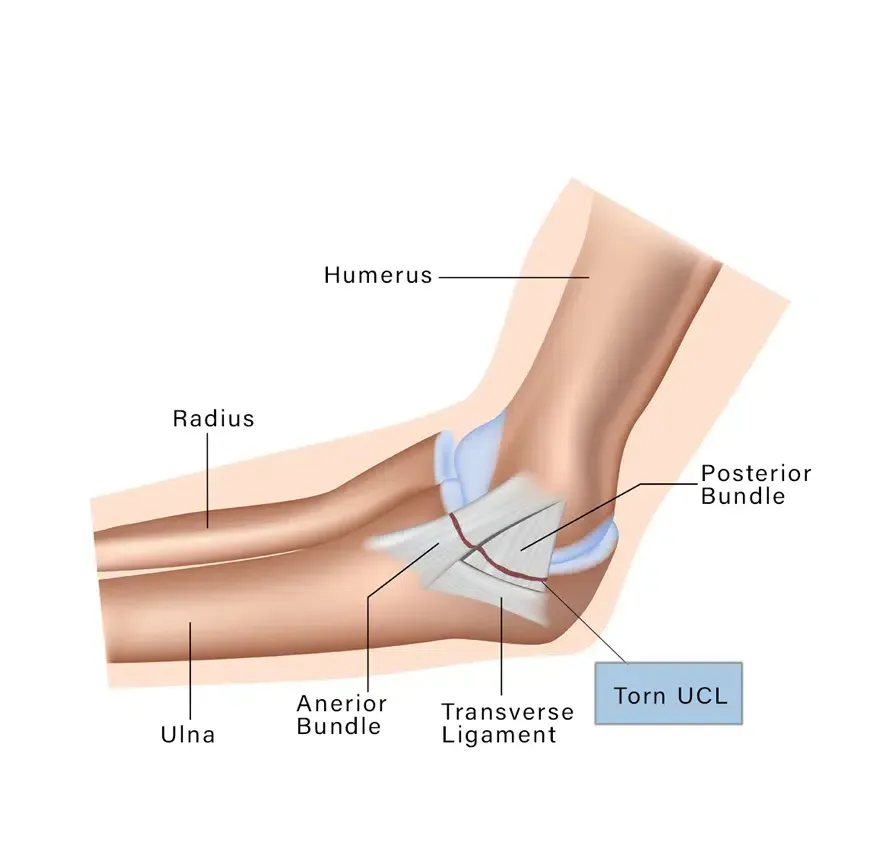
Medial elbow pain is one of the most common issues I see in baseball pitchers — from youth athletes all the way up to professionals. Whether it shows up as soreness on the inside of the elbow, loss of velocity, or fear of a UCL injury, the concern is always the same:
“What can I do to protect my elbow?”
Social media would have you believe the answer is simple:
👉 Do this one exercise and your UCL will be bulletproof.
The reality?
That mindset is exactly why elbow pain keeps coming back.
🎥 Watch the Full Video Breakdown on YouTube
Protect Your UCL: 3 Medial Elbow Exercises Pitchers Need in Their Program
▶️ Watch Here:
⚾ Why UCL Injuries Don’t Come From One Missing Exercise
UCL injuries rarely happen because a pitcher skipped a single drill. They occur when multiple stressors stack up over time, overwhelming the elbow’s ability to tolerate load.
The most common contributors include:
Lack of year-round strength training
Weak or fatigued rotator cuff and scapular muscles
Insufficient forearm and grip strength
Poor recovery, sleep, or nutrition
Sudden spikes in throwing workload
When these factors aren’t addressed together, the medial elbow often becomes the “point of failure.”
That’s why true injury risk reduction is multifactorial — not exercise-dependent.
🧠 The Role of the Forearm in Medial Elbow Protection
The UCL is supported by several dynamic stabilizers, particularly the muscles of the forearm. Two of the most important are:
Flexor Digitorum Superficialis (FDS)
This muscle lies directly over the UCL and helps absorb valgus stress during throwing. When it lacks strength or endurance, more stress is transferred directly to the ligament.
Flexor Carpi Ulnaris (FCU)
Another major stabilizer of the medial elbow, especially during late cocking and acceleration. Proper strengthening improves load tolerance and delays fatigue during outings.
Targeted forearm training can:
✔ Offload stress from the UCL
✔ Improve endurance late in games
✔ Support higher throwing volumes
But only when progressed appropriately.
🏋️♂️ Why Progression and Positioning Matter
One of the biggest mistakes pitchers make is jumping straight into aggressive elbow exercises — especially in vulnerable positions like 90/90 — before the tissue is prepared.
A smarter approach:
Start with longer-duration isometrics
Train in safer, more extended positions first
Gradually increase intensity and joint angles
Progress volume before chasing load
Rushing this process often leads to irritation instead of resilience.
🧩 How Medial Elbow Exercises Fit Into a Complete Program
Elbow-specific drills work best when they are:
Performed ~2x per week
Integrated into a full-body strength program
Paired with proper throwing workload management
Supported by recovery and sleep
They should never replace:
Shoulder and scapular strength work
Lower-body and trunk development
Intelligent throwing progressions
When all of these pieces work together, pitchers build arms that are not just strong — but durable.
🗓 Tired of Having Elbow or Shoulder Pain Every Time You Throw? Book Your Evaluation Today
If elbow pain, shoulder pain, or arm fatigue is holding you back, there’s a proven path forward.
👉 Book your evaluation here:
https://go.dptpreneur.com/widget/form/zt52az6nu2DnPG0S4SyG
📘 The Arm Pain Blueprint (FREE Download!)
Learn our step-by-step method to eliminate arm pain and rebuild throwing strength.
👉 https://app.dptpreneur.com/v2/preview/4J7IWRe36z3WAeFeGxmv
⚾ Pitcher’s Mechanical Blueprint (FREE GUIDE)
Break down the mechanical checkpoints that reduce elbow stress and boost velocity.
👉 https://go.dptpreneur.com/widget/form/n11cl2tkQwwi9BfjnWpz
🎙 Listen to This Episode on The Lewis Physical Therapy & Sports Rehab Podcast
Catch the full breakdown of how medial elbow strength, workload, and shoulder stability work together to protect pitchers throughout the season.
🎧 Listen on Spotify:
https://open.spotify.com/show/4A6iBs0CzkAwSu9rUVPfGX?si=lrea2AaWQSy5USIT90KXhQ
