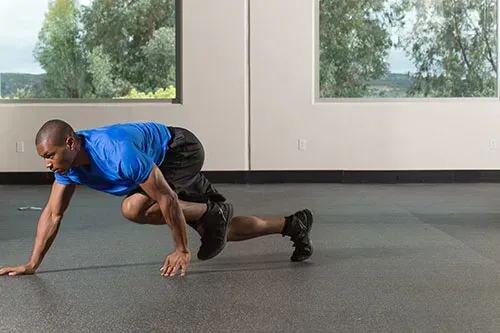
Crawling & Closed Chain Drills for Pitchers Returning From Shoulder or Elbow Injury
Crawling & Closed Chain Drills for Pitchers Returning From Shoulder or Elbow Injury - Lewis Physical Therapy & Sports Rehabilitation
Pitchers returning from shoulder or elbow injuries often focus on band work, throwing progressions, and isolated rotator cuff strengthening. While all of those pieces matter, one critical phase is commonly rushed or skipped entirely: closed chain and crawling-based training.
This phase plays a major role in restoring shoulder stability, protecting the elbow, and preparing the body to handle the demands of throwing again.
🎥 Watch: Crawling & Closed Chain Drills for Pitchers (Video Breakdown)
Before diving deeper, watch the full video where I break down why we use these drills and how to progress them safely in both surgical and non-surgical cases.
🎥 Watch the Full Breakdown on YouTube
Don’t miss the full breakdown on crawling progressions, shoulder stability, and return-to-throwing principles.
▶️ Watch Now on YouTube:
Why Closed Chain Training Matters for Pitchers
Throwing is not just an arm action — it’s a full-body movement that requires coordination between the shoulder, trunk, hips, and lower body. Closed chain drills place the hands against a fixed surface while the body moves around them, which creates a unique stimulus for rebuilding joint centration and stability.
In these positions, the rotator cuff works from both the front and back of the shoulder to keep the joint centered. At the same time, the scapular stabilizers — especially the serratus anterior — are highly active, helping control shoulder blade motion and reduce stress at both the shoulder and elbow.
This is why closed chain drills are such an effective bridge between early rehab and higher-level throwing demands.
Building the Foundation Before Crawling
We never jump straight into advanced crawling patterns.
Most pitchers — especially post-surgery — need time to rebuild strength, tolerance, and confidence just getting into basic weight-bearing positions. After surgery, we may spend several weeks on isolated table-based work before even introducing plank-style positions.
Once prepared, we typically begin with:
Quadruped/tabletop positions, focusing on pushing the ground away and maintaining scapular control
Bear holds, emphasizing core stiffness and shoulder stability
Proper plank positions, reinforcing full-body tension and alignment
Each step ensures the pitcher can support their bodyweight without compensation or joint irritation.
Progressing Crawling Patterns the Right Way
After mastering static positions, we introduce controlled movement.
We start with weight shifts and shoulder taps, ensuring minimal hip sway and trunk movement. From there, we progress into crawling patterns — but always with small, deliberate steps.
Forward crawls challenge coordination and shoulder stability. Backward crawls increase demands on the serratus anterior and scapular control, making them especially valuable for overhead athletes. Lateral crawls further increase complexity and stability demands.
The goal is not speed or fatigue — it’s control, positioning, and quality movement.
Surgical vs Non-Surgical Considerations
Pitchers returning from surgery must earn each progression. Rushing closed chain work too early can overload healing tissues. Non-surgical cases can often progress faster, but the same principles apply: master the basics before advancing.
Skipping these foundations often leads to lingering pain, loss of confidence, or setbacks once throwing intensity increases.
Final Thoughts
Crawling and closed chain drills aren’t flashy, but they are essential. They teach the shoulder how to stabilize under load, the core how to control motion, and the entire system how to work together again.
When done correctly, they form a crucial bridge from rehab to performance — helping pitchers return to the mound stronger, more stable, and more resilient.
🗓 Ready to Get Throw Pain-Free? Book Your Evaluation Today
If shoulder pain, elbow pain, or post-surgical stiffness is holding you back, there’s a proven path forward.
👉 Book your evaluation here:
https://go.dptpreneur.com/widget/form/zt52az6nu2DnPG0S4SyG
📘 The Arm Pain Blueprint (FREE Download)
Learn the proven system we use to help pitchers rebuild their arms and return to throwing pain-free.
👉 https://app.dptpreneur.com/v2/preview/4J7IWRe36z3WAeFeGxmv
⚾ Pitcher’s Mechanical Blueprint (FREE)
Break down the mechanical checkpoints that reduce stress and improve performance.
👉 https://go.dptpreneur.com/widget/form/n11cl2tkQwwi9BfjnWpz
🎙 Listen to This Episode on The Lewis Physical Therapy & Sports Rehab Podcast
Catch the full breakdown of how closed chain and crawling drills fit into arm rehab and long-term arm care.
🎧 Listen on Spotify:
https://open.spotify.com/show/4A6iBs0CzkAwSu9rUVPfGX?si=lrea2AaWQSy5USIT90KXhQ
