What Is GPP? How Athletes Build a Better Foundation for Speed, Strength & Recovery
What Is GPP? How Athletes Build a Better Foundation for Speed, Strength & Recovery – Lewis Physical Therapy & Sports Rehab
What You’ll Learn in This Blog
General Physical Preparedness, or GPP, is one of the most important but overlooked parts of athletic development.
For baseball players, field athletes, and active individuals, GPP helps build the base needed for higher-level training. It does so by providing athletes a chance to reset/recover (following a competitive season or period), improve movement quality, build work capacity, and prepare their bodies for more intense training phases.
This is especially important for high school baseball players who finish the spring season and immediately jump into summer baseball.
YouTube
🎥 Watch the full breakdown on YouTube:
What Is GPP?
GPP stands for General Physical Preparedness.
The key word is GENERAL.
This phase is not about highly specific performance training. It is not about max-effort Olympic lifting, heavy barbell work, high-intensity anaerobic conditioning, or advanced sport-specific drills.
Instead, GPP focuses on building the general athletic qualities that support everything else.
That includes:
General fitness
Movement quality
Work/aerobic capacity
Body/kinesthetic awareness
Basic strength
Extensive medicine ball & plyometric drills
Think of GPP as the base layer of foundational athletic movement
Before an athlete can push hard in an accumulation or strength phase, they need a foundation that allows them to not only tolerate but recover from higher intensity loading.
Why Athletes Need a GPP Phase
A GPP phase helps athletes build an athletic foundation.
For baseball players, this can be especially useful after a long spring season and right before the start of summer season. Many players finish the high school season beat up, tired, sore, or dealing with small issues they have pushed through for weeks.
Instead of jumping directly into heavy summer training or another competitive season, a short GPP phase gives the body time to reset.
The goal here is to give the body a chance to recover from the prior seasons demands and go into summer season with a solid base of fitness
This phase can help athletes:
Recover from accumulated fatigue
Address nagging aches and pains
Maintain fitness
Improve general movement quality
Rebuild training rhythm
Prepare for the next training block
For high school baseball players, I prefer using a 1-2 week GPP phase as they transition from spring to summer season. The summer season is historically more of a grind for these pitchers (tournaments every weekend) so thats another reason why it serves as a good reset.
When Should Athletes Use GPP?
GPP is most useful during transition periods.
This could include:
1. Between Competitive Seasons
For baseball players, this may happen between the spring high school season and summer baseball.
Instead of continuing to push heavy lifting or high-intensity training, GPP gives athletes a short window to recover while still training productively.
2. After Injury
If a pitcher is shut down from throwing because of an arm injury, that does not mean the entire body stops training.
The athlete can still train:
Lower body
Core
Unaffected arm
General conditioning
Aerobic capacity
Basic movement patterns
When the injured arm is ready to be reintroduced, that arm may need its own GPP-style progression (i.e. good quality rehab) before returning to higher-level lifting or throwing.
3. After Inconsistent Training
If an athlete has missed 2–3 weeks because of illness, travel, school stress, or life demands, jumping right back into a strength phase is usually not the best idea.
A mini GPP phase can act as a re-entry point.
It helps the athlete regain rhythm before progressing into more demanding work.
What Does GPP Training Look Like?
A GPP phase usually includes a mix of:
Circuit-based strength training
Aerobic work
Extensive medicine ball throws & plyometrics
Short-yardage acceleration work (anaerobic capacity focus)
Bodyweight training
General athletic movement
The key is that the intensity stays controlled.
This should not feel like a brutal HIIT workout.
Athletes should finish feeling like they trained, moved well, and built capacity — not like they got crushed.
Circuit-Based Strength Training
During GPP, strength work is often performed in circuits.
A simple setup may include:
3 days per week
Total-body training
6–8 exercises
3–4 rounds
20–30 seconds rest between exercises
2–3 minutes rest between rounds
This is a great time to use a variety of implements:
Dumbbells
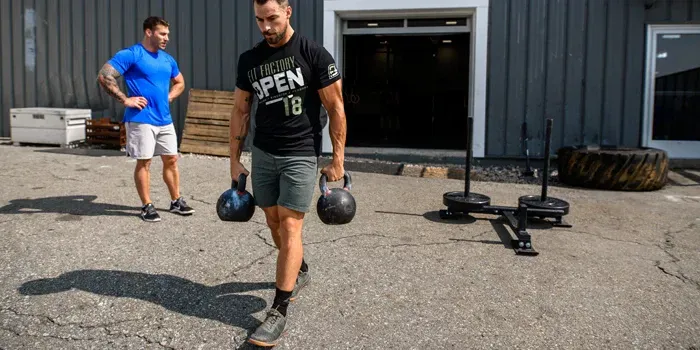
Kettlebells
Sleds
Medicine balls
Sandbags
Bodyweight movements
Unilateral exercises
Unilateral work is especially helpful because it helps address side-to-side differences, builds coordination, and extends the duration of the circuit without needing extremely heavy loads.
GPP Should Not Be Highly Intense Conditioning
One of the biggest mistakes athletes make with GPP is turning it into a high-intensity conditioning workout.
That is not the goal.
The athlete should be breathing and working at a good pace, but not gasping for air, accumulating excessive fatigue or lying on the floor after the session
I generally tell athletes that they should feel better/fresher after the session, not destroyed.
Aerobic Work During GPP
Aerobic work is another key part of GPP.
This may include:
Tempo runs
Bike intervals
Low-intensity steady-state cyclin
For baseball players, aerobic work matters more than many people realize.
A good aerobic base helps with:
Recovery between high-intensity bouts
Recovery between training sessions
Maintaining performance throughout a game
Managing fatigue over a long season
Supporting overall athletic development
For pitchers, this matters because they need to maintain performance over multiple innings, not just one explosive effort. The most important aspect here is to make sure that the intensity stays LOW!!!
Extensive Med Ball & Plyometric Work
During GPP, med ball and plyometric work should usually be extensive, not intensive.
That means:
Higher volume
Submaximal effort
Good rhythm & movement quality
This is not the time for max-effort broad jumps, max-effort box jumps, or higher CNS-demanding explosive work.
The goal is to build coordination, rhythm, and capacity without overloading the nervous system.
Short Acceleration Work
Speed work during GPP should usually be pulled back.
Instead of top-end sprinting or high-intensity speed work, athletes may use short accelerations of 5–10 yards.
Rest periods may be shorter than true speed development work, which naturally reduces intensity and shifts the focus more toward capacity. A good rule of thumb for high effort sprints is a minute rest for every 10 yards, so in this case we maybe drop rest periods to 30-45".
Bodyweight Training Still Matters
Bodyweight work is extremely valuable during GPP, especially for younger athletes.
Simple movements like:
Push-ups
Pull-ups
Crawls
Squats
Lunges
Planks
Carries
can help athletes develop better body awareness and general strength.
For youth athletes, this may be the majority of their training for several months.
They do not need to rush under a barbell.
What Comes After GPP?
After GPP, many athletes will transition into an accumulation phase with the focus on exposing to higher-intensities (~70-85%) at a relatively lower volume.
An accumulation phase will continue to in include:
Sprint work
Plyometrics
Explosive med ball throws
Primary compound lifts
Accessory work
For many athletes, this eventually progresses into a max strength phase. Depending on how long we have after this point until the start of the competitve season, we might run another strength block before going back to an accumulation phase. Ultimately it depends on each athlete.
But without a good GPP phase, athletes may not be prepared to tolerate those later phases well.
GPP for Youth Athletes
Younger athletes may stay in a GPP-style phase much longer as they need more time to develop the qualities listed above. A youth athlete does not need to rush into heavy barbell training if they do not have the movement foundation, training age, or physical maturity to support it.
For younger baseball players, several months of circuit-based training, bodyweight strength, med balls, plyometrics, aerobic work, and general athletic movement can be incredibly valuable.
Final Thoughts
GPP is not flashy, but it is important.
It helps athletes recover, reset, build capacity, improve movement, and prepare for harder training later.
For baseball players, especially those transitioning from spring to summer baseball, a short GPP phase can be a smart way to stay active while giving the body what it needs.
The better the foundation, the better the athlete can tolerate speed, strength, power, throwing, and competition later.
