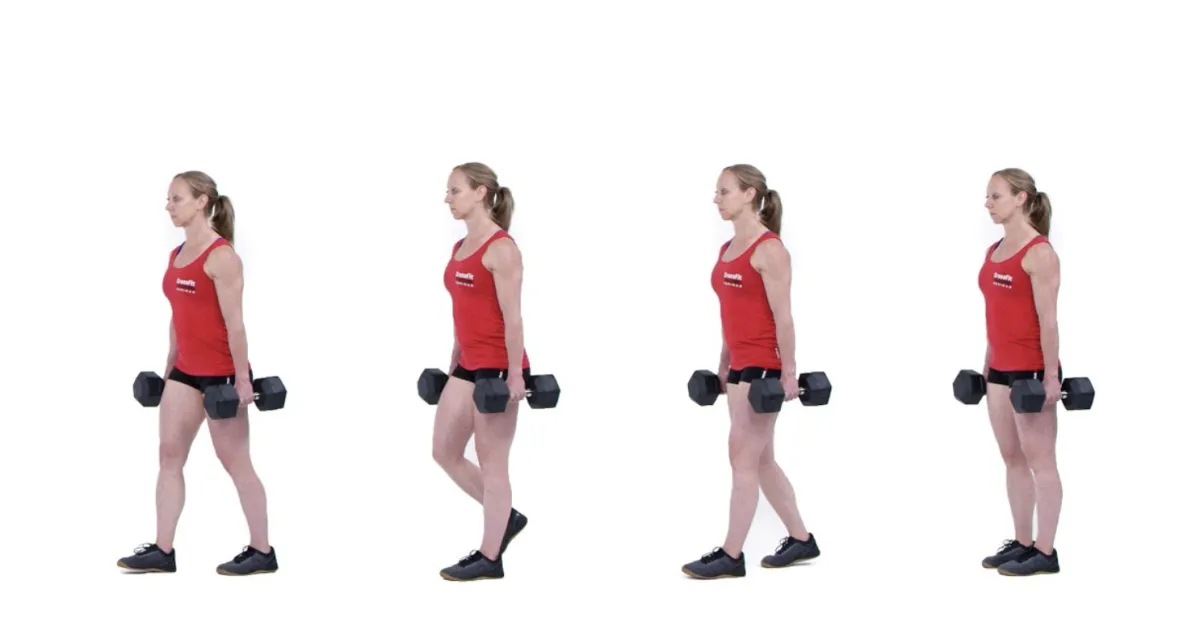
Loaded Carries: The Most Underrated Exercise for Core Strength, Grip & Conditioning
Loaded Carries for Core Strength, Grip and Conditioning – Lewis Physical Therapy & Sports Rehab
What You’ll Learn in This Blog
In this blog, you’ll learn why loaded carries are valuable for athletes and active adults, how they improve trunk stiffness and force transfer, and how to incorporate them into your training. You’ll also learn how carries can be used for grip training and low-impact conditioning.
Watch This Week’s Video on YouTube
Watch the full explanation and loaded-carry programming recommendations here:
Why Are Loaded Carries So Effective?
Loaded carries require you to hold or move a challenging weight while maintaining control of your trunk, pelvis, and shoulders.
Common variations include:
Farmer’s carries
Suitcase carries
Front-rack carries
Trap-bar carries
Overhead carries
Cross-body carries
Sandbag carries
Marching variations
Although the exercises appear simple, they can simultaneously challenge your core, grip, shoulders, lower body, and cardiovascular system.
Improve Trunk Stiffness and Core Bracing
One of the primary benefits of loaded carries is improved trunk stiffness.
Trunk stiffness does not mean eliminating all movement during every activity. It means creating enough stability to resist excessive movement when lifting, carrying, or transferring force.
During a heavy squat or deadlift, poor bracing can allow unnecessary movement through the spine and leave it vulnerable to injury. Loaded carries teach you to maintain your rib cage and pelvis in a controlled position while managing a heavy external load.
You’ll often recognize a bracing problem quickly during a heavy trap-bar march. If you cannot remain stable, you may sway from side to side, arch your lower back, or lose control of your pelvic position.
Loaded Carries for Athletic Performance
Athletes must transfer force efficiently throughout the body.
For a baseball player, force is generated primarily through the lower body before traveling through the trunk and into the throwing arm. If the trunk cannot remain stable, some of that energy may be lost before reaching the arm.
This “energy leak” can reduce performance and potentially increase the stress placed on other areas of the body.
Loaded carries help athletes learn to create and maintain the stiffness needed to transfer force more efficiently.
You Don’t Need Much Space or Equipment
Loaded carries are extremely adaptable.
If you have room, you can carry dumbbells, kettlebells, a trap bar, or a sandbag for distance. If you train in a smaller space, load a trap bar or hold kettlebells and march in place.
You can also change the difficulty without continuously adding more weight. A single-leg stance, split stance, half-kneeling position, or uneven loading pattern can make an exercise more demanding.
This can be especially useful when someone needs a challenging total-body exercise but cannot tolerate a large amount of weight through the shoulder.
Build Conditioning Without Running
Running is not the only way to improve conditioning.
For active adults with previous knee, hip, back, or lower-extremity injuries, loaded carries can provide a lower-impact method for developing work capacity.
Carries can be performed independently or incorporated into a circuit. They may be combined with sled pushes, weighted-vest walks, and other exercises to raise the baseline level of fitness needed to recover between higher-intensity efforts.
The goal is not simply to survive a difficult workout. Your training should help you make progress while remaining healthy enough to train consistently.
Improve Grip and Shoulder Strength
Heavy carries are also an effective grip-strength exercise.
Dead hangs can be valuable, but some people experience shoulder discomfort when they progress directly into prolonged bodyweight hanging. A heavy carry provides another way to train the hands, forearms, shoulders, and upper body without immediately requiring an overhead position.
While carrying, maintain an active shoulder position rather than allowing the weight to pull your shoulders and neck downward.
For someone working toward a pull-up, loaded carries can help establish a foundation of grip strength, shoulder endurance, and general upper-body capacity.
How Often Should You Perform Loaded Carries?
Your ideal frequency depends on the variation, intensity, and goal.
A lighter suitcase or rack carry can be used during a warm-up for approximately 30 seconds to reinforce trunk and pelvic positioning.
Heavier variations may be programmed two or three times per week as part of a strength session or conditioning circuit.
Choose a load that challenges you without causing you to lose your posture, bracing, or control. Quality should always determine the weight and duration.
Ready to Stop Starting Over?
If pain, previous injuries, or an inconsistent training routine keep interrupting your progress, an individualized plan can help you train more confidently.
🏋️ 10-Week Strength Program for Busy Dads and Active Adults
Build strength, improve mobility, and develop a sustainable training routine.
👉 https://www.lewisptsr.com/back-to-basics-program
📚 Lewis Physical Therapy & Sports Rehabilitation Blog
👉 https://www.lewisptsr.com/home-blog-1358
🎵 Lewis Physical Therapy & Sports Rehabilitation Podcast
👉 https://open.spotify.com/show/4A6iBs0CzkAwSu9rUVPfGX
