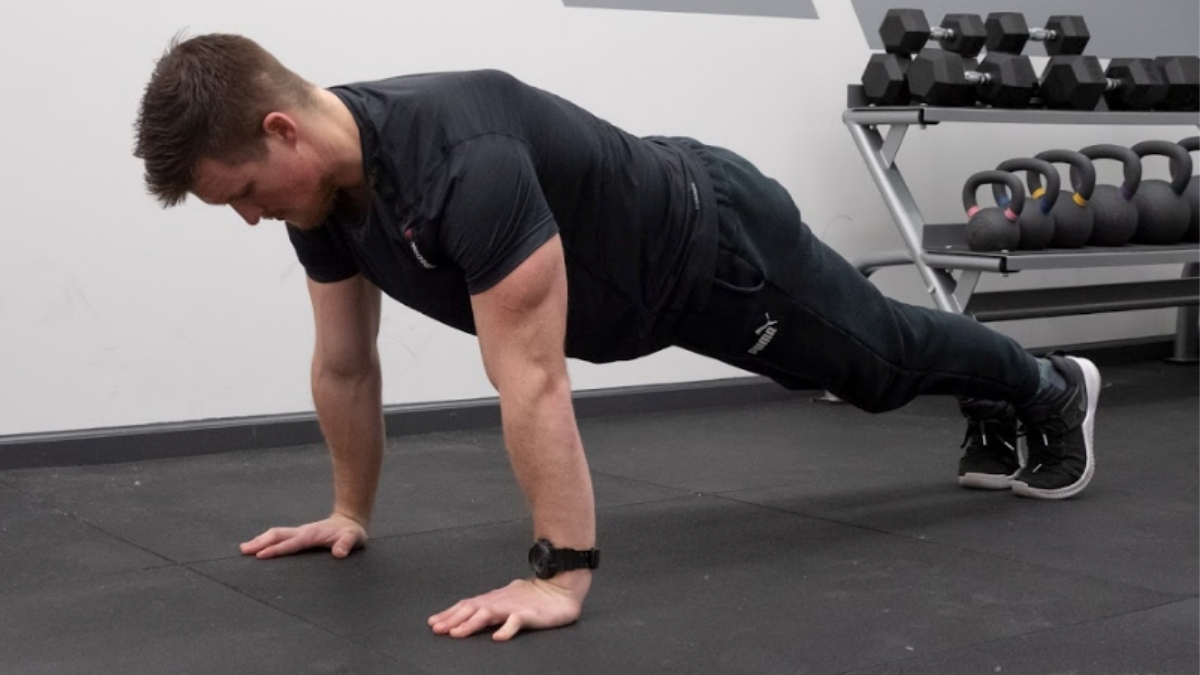
How to Program Assistance Exercises in a Training Program for Busy Dads and Adults
How to Program Assistance Exercises in Your Training Prorgam (For Busy Dads & Adults) – Lewis Physical Therapy & Sports Rehab
What You’ll Learn in This Blog
Assistance exercises should help you strengthen weak areas, build muscle, and improve your physical capacity. In this blog, you’ll learn where rehab exercises belong, how many assistance exercises you may need, which muscles deserve additional attention, and how to select the right sets, reps, and intensity.
Watch This Week’s Video on YouTube
Watch the complete explanation here:
Your Strength Workout Shouldn’t Become a Rehab Session
As we get older, most of us accumulate a collection of previous injuries, stiff joints, and recurring aches. It is reasonable to account for those issues when planning a workout.
The problem begins when assistance work turns into a 30-minute physical therapy/rehab session.
Physical therapy can prepare someone to return to strength training, but it should not permanently replace strength and conditioning.
The goal is to respect your injury history without remaining trapped in a rehabilitation mindset.
Where Should You Put Your Rehab Exercises?
Consider placing low-dose rehab exercises in your warm-up or performing them between the warm-up sets of your main compound lift.
For example, someone with a history of hip impingement who needs to improve posterior-chain recruitment could perform back extensions or single-leg glute bridges before trap-bar deadlifts. These exercises could also be completed between the first few deadlift warm-up sets.
This gives the hips and surrounding muscles additional movement and blood flow while preparing the body for the primary exercise.
You do not need to perform the rehab exercise between every working set. A few targeted sets during the warm-up may be enough.
What Is the Purpose of Assistance Work?
Assistance work should strengthen areas that need additional attention and support your main compound exercises.
Important upper-body areas frequently include:
Triceps
Lats
Upper back
Deltoids
Biceps
The triceps contribute to pressing strength, while the lats and upper back create a stable platform during the bench press and other pulling movements. Developing these areas may help distribute the demands of pressing instead of allowing most of the stress to remain on the chest and front of the shoulder.
Biceps training may not directly improve every compound exercise, but there is nothing wrong with including it for arm strength and appearance.
Lower-body priorities frequently include:
Glutes
Hamstrings
Spinal erectors
Abdominal bracing and trunk stiffness
The glutes and hamstrings help produce hip extension, while the spinal erectors and abdominal muscles help maintain position when pulling from the floor or training under significant load.
How Many Assistance Exercises Do You Need?
Most busy adults do not need five or six assistance exercises after every main lift.
Two or three focused exercises per workout can address the most important weak areas while keeping the session efficient. You can rotate exercises throughout the week or across different phases of your program.
This is especially important for adults balancing training with work, family, and other responsibilities. More exercises are not automatically better if the length of the workout prevents you from following the program consistently.
Use a Hypertrophy Approach
Assistance work is an appropriate place to use bodybuilding or hypertrophy-based training.
A general recommendation is:
Approximately 8–15 repetitions
3-5 sets
Enough resistance to make the final repetitions challenging
Three sets of 10 is not automatically a poor prescription. Its effectiveness depends on the intensity.
If you complete 10 repetitions with a weight you could have lifted 20 or 25 times, the set may be too easy. If 15 repetitions are prescribed, consider choosing a weight you could lift approximately 16 or 17 times—not one you could lift only eight times or more than 20 times.
The goal is to approach fatigue while maintaining appropriate technique.
Build Work Capacity with Sleds and Carries
Assistance work can also improve general physical preparedness and work capacity.
Someone who has not run in 15 years may not be ready to use continuous running for conditioning. Running can eventually be introduced, but its initial dosage should be selected carefully.
Sled pushes, sled drags, and loaded carries offer other ways to build work capacity. They also prepare you for everyday demands such as carrying children, moving objects around the house, and controlling loads in awkward positions.
One simple session could include:
Trap-bar deadlift + Glute Bridges
Pull-ups
Triceps extensions
A 20- to 30-yard sled push or carry
Complete the assistance exercises as a circuit for two or three rounds. This strengthens weak areas while providing a conditioning effect.
Build Strength Without Ignoring Your Injury History
Previous injuries should influence your program, but they do not need to control the entire workout.
Use targeted rehab exercises during the warm-up, choose two or three assistance exercises that strengthen meaningful weak areas, train those exercises with enough intensity to promote adaptation, and include sleds or carries when you need more work capacity.
This approach can help you become stronger, fitter, and more capable without spending your entire workout thinking like an injured person.
🏋️ 10-Week Strength Program for Busy Dads and Adults
Build strength, improve mobility, and create a consistent training routine that accounts for old injuries and a busy schedule.
👉 https://www.lewisptsr.com/back-to-basics-program
📅 Book an Evaluation
Work one-on-one with Lewis Physical Therapy & Sports Rehabilitation in Point Pleasant, New Jersey.
👉 https://lewisptsr.janeapp.com/#staff_member/2
🎵 Listen to the Podcast
👉 https://open.spotify.com/show/4A6iBs0CzkAwSu9rUVPfGX
📚 More Articles
👉 https://www.lewisptsr.com/home-blog-1358
🎁 Free Resources
Arm Pain Blueprint: https://sites.leadconnectorhq.com/preview/4J7IWRe36z3WAeFeGxmv
Pitcher’s Mechanical Blueprint: https://go.dptpreneur.com/widget/form/n11cl2tkQwwi9BfjnWpz
