UCL & Flexor Tendon Injury Loading Protocol | Complete Progression for Pitchers
UCL & Flexor Tendon Loading Protocol | Complete Isometric Progression for Pitchers - Lewis Physical Therapy & Sports Rehabilitation
UCL injuries are one of the most feared diagnoses in baseball, and for good reason — they're notorious for long recovery timelines and the dreaded "Tommy John" conversation. One of the biggest things we see overlooked during rehab is how to properly load the medial elbow to better withstand the stresses of throwing.
In this blog, you'll learn:
How we view the relationship between the UCL and the flexor tendon
Why early stage isometrics matter more than people think
How loading progresses from early to mid to late stage
Why I've pulled back on plyometrics for pitchers
The role of rate of force development (RFD) training
How this framework prepares athletes for a safe return to throwing
🎥 Watch This Week's Video on YouTube
Wondering how we load the UCL and flexor tendon during rehab?
In this video, I break down the loading framework we use for UCL and flexor tendon injuries — and why we treat these two structures as one and the same more often than not.
▶️ Watch Now on YouTube:
Why We Treat the UCL and Flexor Tendon as One and the Same
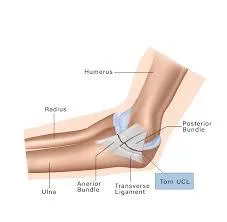
The UCL and flexor tendon are more connected than most people realize.
Here's the logic:
The flexor tendon's job is to absorb and dissipate force during pitching
When it can no longer do that job, the stress has to go somewhere
That stress often propagates straight to the UCL
When I treat medial elbow pain with targeted isometrics and eccentrics for the flexor tendon, UCL symptoms frequently clear up. This isn't always the case, but have seen it happen more often than not. That clinical pattern is the foundation for the entire framework below.
Early Stage: Building Tolerance, Not Strength
Early on — whether post-surgery or post-injury — pain is at its highest and there's likely some inflammation present.
At this stage, we focus almost entirely on:
Isometrics for the FDS, FCU, brachialis, and pronator
Two sessions per day, spaced 4-6 hours apart
Four sets of 30 seconds per muscle group
Slow 3-5 second buildup into each hold (never quick contractions)
Protected ranges, with no valgus stress yet
The goal isn't to build strength yet. It's to accumulate tolerable load, get some analgesic response, and avoid anything resembling a "tendon jerk" — injured tendons do not respond well to fast, high-velocity stress.
Mid Stage: Introducing Real Stress
Once tolerance improves, we begin asking more of the tissue.
This stage includes:
Continued long-duration isometrics for recovery days
Strength isometrics: 3-5 sets of 20 seconds, higher intensity
Gradual introduction of valgus stress and throwing-specific arm slots
Slow eccentrics and concentrics (think 3-5 second eccentric, 3 second concentric)
A metronome can help keep tempo honest during this phase
The key here is control. We're still avoiding fast tempo work — every rep builds up gradually rather than jumping straight to intensity.
Late Stage: Less Plyo, More Local Strength
This is where our approach differs from a lot of standard return-to-throw programs.
It's easy to get plyo-happy in this phase, loading up on med ball work. But pitchers are elite compensators — their bodies already know how to throw a ball, often after a decade or more of repetition. What's usually lacking is local stability in the medial elbow stabilizers.
So in late stage, we prioritize:
Higher intensity isometrics — 80%+ effort, 3-6 sets of 10-15 seconds
Maximum valgus & arm slot positions
Continued eccentric/concentric work at higher loads
Implementing RFD Drills — 3-2-1-go straight to 80-100% intensity, held for 3-5 seconds
Throwing itself is already a plyometric activity. Stacking heavy plyo volume on top of heavy strength work creates interference early on in rehab — you can't peak two qualities at once. I'd rather max out local stability here and let throwing serve as the plyometric stimulus once an athlete returns to the mound. To clarify, I do still perform plyo ball work just not as much as I use to early in my career
This Is a Framework, Not a Prescription
This progression is built on current research and then refined based on real-world application from what I've seen in the clinic.
Every athlete's timeline will look different depending on:
Surgical vs. non-surgical history
Severity of the original injury
How the tissue responds along the way
If you're dealing with lingering elbow pain, a flexor tendon injury, or you're working through return-to-throw programming, a structured loading approach — not fear of movement — is what gets pitchers back on the mound safely.
⚾ Built for the Diamond: 10-Week Baseball Strength & Power Program Speed, power, explosiveness, and arm care — all in one structured program built specifically for baseball players. 👉 https://www.lewisptsr.com/baseball-strength-power-program-310732
🏋️ Stop Starting Over: 10-Week Strength Program for Former Athletes (Ages 20–30) Built for guys with an athletic background, old injuries, and a busy schedule who are ready to train smart and build something that lasts. 👉 https://www.lewisptsr.com/back-to-basics-program
💪 Arm Pain with Throwing? Check out the Lewis Arm Rebuild Program here: https://www.lewisptsr.com/lewis-arm-rebuild-program
📚 Blog: https://www.lewisptsr.com/home-blog-1358
🎵 Listen to the Lewis Physical Therapy & Sports Rehabilitation Podcast here: https://open.spotify.com/show/4A6iBs0CzkAwSu9rUVPfGX?si=lrea2AaWQSy5USIT90KXhQ
