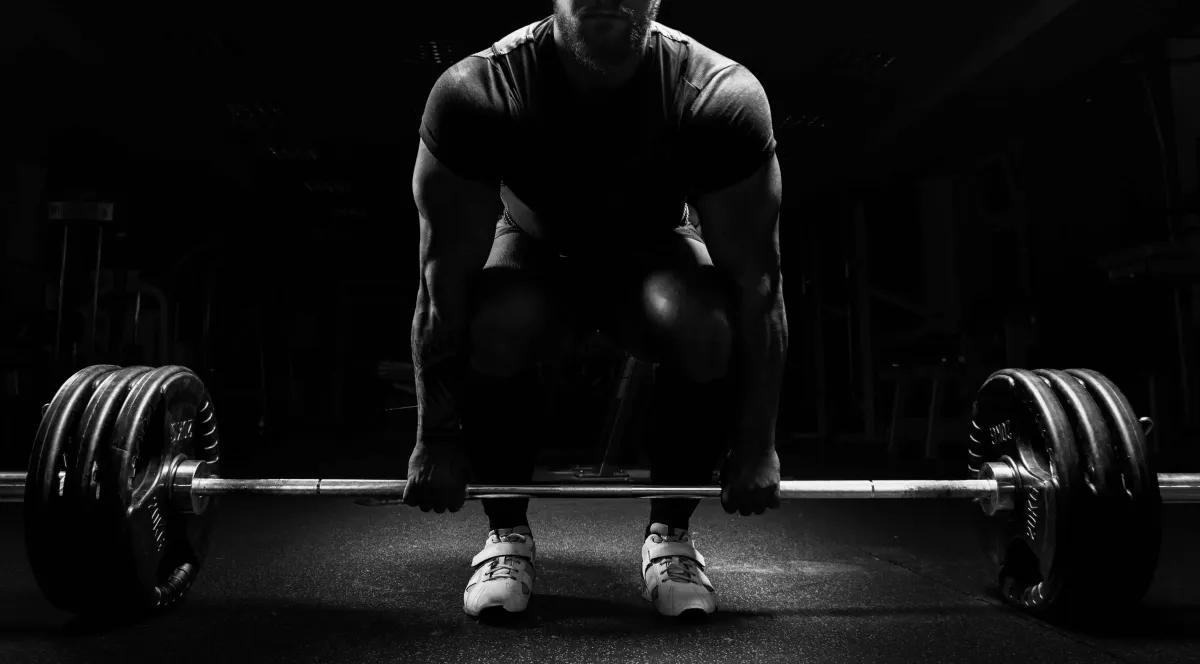
One-Rep Max Testing for Adults and Young Field-Sport Athletes
One-Rep Max Testing for Adults and Young Field-Sport Athletes – Lewis Physical Therapy & Sports Rehab
What You’ll Learn in This Blog
In this blog, you’ll learn why true one-rep max testing may not be the best choice for busy adults or younger field-sport athletes, how to measure strength with safer alternatives, and why consistent submaximal training supports long-term progress.
Watch This Week’s Video on YouTube
Watch the full video here:
Is One-Rep Max Testing Necessary?
A one-rep max test measures the most weight someone can lift for one repetition. Although it can be useful for competitive powerlifters and Olympic weightlifters, most adults and younger field-sport athletes don’t need to perform an all-out lift to measure progress.
Younger athletes may not have the training experience, coordination, or technical consistency required to safely attempt maximal squats, deadlifts, or bench presses.
Adults may have different limitations, including:
Previous injuries
Joint stiffness or discomfort
Inconsistent training schedules
Limited recovery time
Poor recent training history
Work and family responsibilities
For both populations, the goal should be to build usable strength—not simply produce the biggest possible number for one repetition.
Why Missed Lifts Can Become a Problem
A successful strength program should reinforce quality movement and build confidence.
When someone regularly attempts maximal weights, fatigue can cause their technique to break down. This can create excessive stress, reinforce poor movement patterns, and potentially aggravate an existing injury.
Missed lifts can also affect confidence. This is especially important for younger athletes who are still developing their relationship with strength training and adults who are trying to rebuild a consistent exercise routine.
Training should leave people feeling successful and ready to return—not discouraged or physically beaten up.
Build a Strong Foundation First
Before focusing on heavy barbell exercises, younger athletes and adults returning to training should develop a general physical foundation.
This may include:
Dumbbell and kettlebell exercises
Sled pushes and pulls
Sandbag and medicine-ball training
Calisthenics
Jumping and sprinting
Mobility exercises
Aerobic conditioning
Movement in multiple directions
For field-sport athletes, this foundation helps develop the movement options, strength, speed, and work capacity required for their sport.
For busy adults, it restores basic strength and conditioning while preparing the body for progressively heavier training.
Utilizing A Five-Rep Max
A controlled five-rep max can provide valuable information without requiring a true maximal attempt.
One option is a simple 5x5 progression that has been written about extensively in the past. It's nothing fancy by any means, but can be very effective. The first two sets serve as progressively heavier warm-up sets. The final three sets become the primary working sets.
The weight can gradually increase over several weeks. On the final testing week, the individual performs a challenging set of five while maintaining good technique and leaving approximately one or two repetitions in reserve.
There should be no forced repetitions, significant breakdown in form, or all-out grinding.
Calculate an Estimated One-Rep Max
The Epley formula can estimate a one-rep max using the weight lifted and the number of repetitions completed:
Estimated 1RM = Weight × (1 + Repetitions ÷ 30)
For example, if someone performs 350 pounds for five quality repetitions:
350 × (1 + 5 ÷ 30) = approximately 408 pounds
Instead of using 408 pounds to calculate future training loads, a more conservative training max can be established at approximately 90%:
408 × 0.90 = approximately 367 pounds
Future training percentages would be based on 367 pounds rather than the full estimated max.
For someone returning from an injury or an extended break, the training max could be reduced further to approximately 80–85% of the estimated one-rep max. You could then increase this by 5 pounds (upper body exercises) or 10 pounds (lower body exercises) every 1-2 training blocks as you see fit...check out work by notable names in S&C like Jim Wendler for more information on this.
Other Ways to Measure Strength Progress
Adults and athletes don’t need to attempt a true one-rep max to prove they’re getting stronger.
Progress can be measured by:
Performing more repetitions with the same weight
Lifting more weight for the same number of repetitions
Moving the same weight with better technique
Moving a submaximal weight faster
Completing the same workout with less fatigue
Improving training consistency
Recovering more effectively between sessions
If someone previously completed 350 pounds for five repetitions and can now perform eight quality repetitions, they have gotten stronger.
Similarly, progressing from 350 pounds for five repetitions to 380 pounds for five demonstrates measurable improvement without requiring an all-out lift.
Focus on Strength That Supports Your Goals
Younger field-sport athletes need strength that improves speed, power, durability, and performance—not strength that only shows up during a maximal gym test.
Busy adults need strength that helps them look better, feel better, move well, manage old injuries, and remain physically capable outside the gym.
In both cases, small improvements accumulated over months and years matter more than one impressive lift.
Quality repetitions, appropriate loading, recovery, and consistency create lasting progress.
Ready to Build Strength the Right Way?
🏋️ 10-Week Strength Program for Busy Dads & Adults
A structured program for busy dads & adults who want to rebuild strength, improve mobility, and train consistently around old injuries.
👉 https://www.lewisptsr.com/back-to-basics-program
⚾ Built for the Diamond: 10-Week Baseball Strength & Power Program
Speed, strength, explosiveness, and arm care in one structured program for baseball players.
👉 https://www.lewisptsr.com/baseball-strength-power-program-310732
💪 Arm Pain with Throwing?
Learn more about the Lewis Arm Rebuild Program.
👉 https://www.lewisptsr.com/lewis-arm-rebuild-program
📚 Read More Articles:
https://www.lewisptsr.com/home-blog-1358
🎙️ Listen to the Lewis Physical Therapy & Sports Rehabilitation Podcast:
https://open.spotify.com/show/4A6iBs0CzkAwSu9rUVPfGX?si=lrea2AaWQSy5USIT90KXhQ
