The 3 Essential Movements Every Young Athlete Must Master
🏆 The 3 Essential Movements Every Young Athlete Must Master - Lewis Physical Therapy & Sports Rehabilitation
When a young athlete begins training, one of the biggest mistakes they make is skipping the basics. Parents see videos online of explosive drills, heavy lifts, or flashy speed ladders — but the athletes lack the foundational strength and body control to benefit from them.
That’s why I start almost every youth athlete with the same three movements: the goblet squat, push-up, and pull-up. Whether your child is in baseball, football, basketball, or just beginning training, these three patterns form the base of all strength, power, and speed development.
🎥 Watch the Full Breakdown on YouTube
▶️ Watch Now on YouTube:
Why GPP Matters for Long-Term Success
Before a young athlete can safely load a barbell or work on higher-level plyometrics, they need GPP — General Physical Preparedness.
GPP builds coordination, movement awareness, stabiltiy & work capacity in basic patterns that carry over to every sport.
Without it?
Athletes fatigue faster, plateau in performance, and have higher injury risk — especially during growth spurts.
1️⃣ Goblet Squat — The Foundation of Lower Body Strength
The goblet squat is the perfect starting point because the weight held in front naturally teaches the athlete:
How to stay upright
How to reach correct depth
How to control the hips and knees
Young athletes often shift onto their toes, collapse forward at the waist/trunk, or lose balance. The goblet squat cleans all of that up and creates confidence before progressing to trap bar deadlifts or barbell squats.
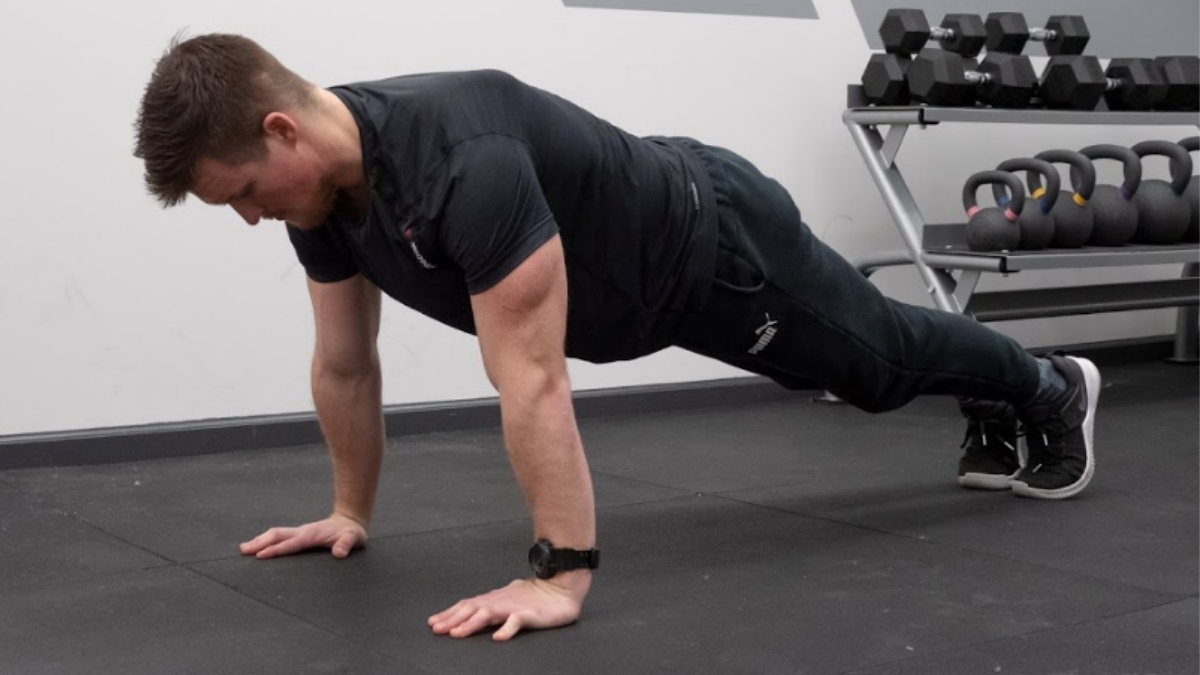
2️⃣ Push-Up — The Most Underrated Core Strengthener
Most beginners flare their elbows, sag their hips, or “worm” their way up.
A proper push-up is actually a full-body movement requiring core stability, shoulder stability, and upper-body strength.
Starting with planks, partial-range reps, and tempo push-ups helps athletes groove the pattern and build strength safely.
3️⃣ Pull-Up — Upper Body Strength & Shoulder Control
This is typically the hardest of the three, but it’s one of the most valuable.
Pull-ups teach tension, scapular control, and total-body strength.
Regressions like knee-tucks, isometric holds, and band-assisted pull-ups help athletes progress safely until they can perform full reps with control.
How to Use These for a 6-Week Foundation
You can rotate these exercises every two weeks:
Weeks 1–2: Daily push-up practice
Weeks 3–4: Daily pull-up regressions
Weeks 5–6: Daily goblet squat patterning
This approach builds strength, confidence, and long-term durability.
🗓 Ready to Get Out of Pain? Book Your Evaluation Today
If shoulder pain, elbow pain, or nagging injuries are slowing you down, there’s a proven path forward.
👉 https://go.dptpreneur.com/widget/form/zt52az6nu2DnPG0S4SyG
🎙 Listen to This Topic on The Lewis Physical Therapy & Sports Rehab Podcast
Dive deeper into long-term athletic development and youth training fundamentals.
🎧 Listen on Spotify: https://open.spotify.com/show/4A6iBs0CzkAwSu9rUVPfGX?si=lrea2AaWQSy5USIT90KXhQ
📘 The Arm Pain Blueprint (FREE Download!)
Download the Arm Pain Blueprint to start your journey to throwing pain-free.
👉 https://app.dptpreneur.com/v2/preview/4J7IWRe36z3WAeFeGxmv
⚾ Pitcher’s Mechanical Blueprint (FREE GUIDE)
Break down the mechanical checkpoints that reduce stress and boost velocity.
👉 https://go.dptpreneur.com/widget/form/n11cl2tkQwwi9BfjnWpz
