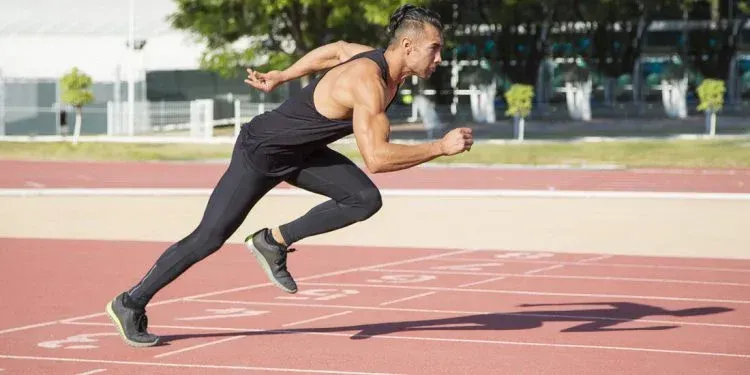
Why High-Intensity Workouts Every Day Are Hurting Your Progress
Why High-Intensity Workouts Every Day Are Hurting Your Progress - Lewis Physical Therapy & Sports Rehabilitation
Many athletes and active adults believe that training harder and more frequently will produce better results.
But one of the most common mistakes I see in both populations is stacking high-intensity workouts every single day of the week, without proper recovery methods.
While that might feel productive, it often leads to fatigue, slower progress, and increased injury risk.
The key to improving performance is not simply working harder — it's structuring training intensity properly throughout the week.
Watch the Full Breakdown
In this video, I explain how athletes and active adults can structure their weekly training to maximize performance and recovery.
Watch on Youtube Here:
Understanding the High-Low Training Model
A simple and effective framework many performance coaches use is called the High-Low Training Model.
The concept is straightforward.
Instead of training at maximum intensity every day, you alternate between:
High Intensity Days
• Strength training
• Sprinting
• Explosive medicine ball work
• Jump training
Low Intensity Days
• Aerobic recovery work
• Tempo running
• Low intensity circuits
• Mobility work
For example, a weekly structure might look like:
Monday – High Intensity
Tuesday – Low Intensity (Mobility + Bike Conditioning)
Wednesday – High Intensity
Thursday – Low Intensity (Mobility + Tempo Runs)
Friday – High Intensity
Saturday/Sunday – Optional Recovery or OFF
This structure allows the nervous system and musculoskeletal system to recover between demanding sessions.
Why Aerobic Recovery Work Matters
Many athletes — especially strength athletes — avoid aerobic work because they believe it will interfere with strength gains.
However, low-intensity aerobic training can actually improve performance (within reason).
Aerobic conditioning helps:
• Improve recovery between high-intensity efforts
• Increase work capacity
• Improve circulation and tissue recovery
• Reduce fatigue during training sessions
The key is keeping this work low intensity.
A good guideline is staying between 55–75% of your estimated maximum heart rate.
One simple way (not the gold standard but a good rule of thumb nonetheless) to estimate max heart rate is:
220 minus your age.
Examples of Low Intensity Recovery Work
Recovery sessions do not have to be complicated.
Here are a few effective options.
Tempo Runs
Run 40–50 yards at approximately 65–70% effort.
Rest 30-40 seconds between reps.
Repeat for 10–20 minutes based on current level of aerobic conditioing.
The goal is consistent effort, not progressively faster runs. The last rep should be the same speed as the first rep.
Low Intensity Cardio
Options include:
• Bike
• Elliptical
• Walking
• Light jogging
• Pool
Perform for 20 minutes (minimum) at a comfortable pace where you can still hold a conversation.
Low Intensity Circuits
Another great option is bodyweight circuits.
Example circuit:
• 15 Push-Ups
• 5 Pull-Ups
• 10 Bodyweight Squats
• 10 Lunges
• Hanging Knee Raises
Move steadily through the circuit for 15–20 minutes without pushing maximal intensity.
Why Even Power Athletes Need Aerobic Conditioning
Many sports — including baseball, football, and powerlifting — are dominated by short bursts of high intensity effort (i.e. anaerobic-dominant sports).
However, aerobic conditioning plays a crucial role in how quickly an athlete can recover between those efforts.
For example:
A baseball player sprinting to first base after contact produces a high-intensity effort.
The faster they recover, the sooner they can produce another powerful effort (i.e. stealing 2nd).
Improving aerobic conditioning increases an athlete's ability to recover quickly from high-intensity bouts and maintain performance throughout competition and training.
Final Thoughts
Training hard is important.
But training smart is what produces long-term results.
By organizing your week using a high-low training structure, you can:
• Recover faster
• Train harder on high days
• Reduce injury risk
• Improve long-term performance
Sometimes the key to getting stronger and faster isn't pushing harder — it's recovering better.
📅 Ready to Throw Pain-Free?
If shoulder or elbow pain is slowing down your throwing, there’s a proven path forward.
👉 Book your evaluation here:
https://go.dptpreneur.com/widget/form/zt52az6nu2DnPG0S4SyG
⚾ Pitcher’s Mechanical Blueprint (FREE GUIDE)
Break down the mechanical checkpoints that reduce stress and improve velocity.
👉 https://go.dptpreneur.com/widget/form/n11cl2tkQwwi9BfjnWpz
📘 The Arm Pain Blueprint (FREE Download!)
Learn the step-by-step system we use to help pitchers recover and return to throwing pain-free.
👉 https://app.dptpreneur.com/v2/preview/4J7IWRe36z3WAeFeGxmv
🎙 Listen to This Episode on The Lewis Physical Therapy & Sports Rehab Podcast
Catch the full breakdown of how aerobic conditioning and training structure improve athletic recovery and performance.
🎧 Listen on Spotify:
https://open.spotify.com/show/4A6iBs0CzkAwSu9rUVPfGX?si=lrea2AaWQSy5USIT90KXhQ
