Hip Pinching During Squats? Why Stretching Isn’t the Fix (And What To Do Instead)
Hip Pinching During Squats? Why Stretching Isn’t the Fix (And What To Do Instead) - Lewis Physical Therapy & Sports Rehabilitation
If you feel sharp or pinchy pain at the front of your hip or groin every time you reach the bottom of a squat, you’re not alone. Many lifters, CrossFit athletes, and active adults assume they just need more mobility — so they stretch harder, go deeper, and try to push through it.
But when symptoms are related to femoroacetabular impingement (FAI), forcing range of motion is often the exact opposite of what helps.
Instead of stretching more, the real solution is learning how to modify squat patterns, improve hip positioning, and keep training without constantly irritating the joint.
🎥 Watch the Full Video Breakdown on YouTube
Before changing your training, watch the full breakdown where I demonstrate the exact squat variations and coaching cues I use with athletes and active adults dealing with hip pinching:
▶️ Watch Now on YouTube:
❌ Why Stretching Usually Doesn’t Fix Hip Impingement
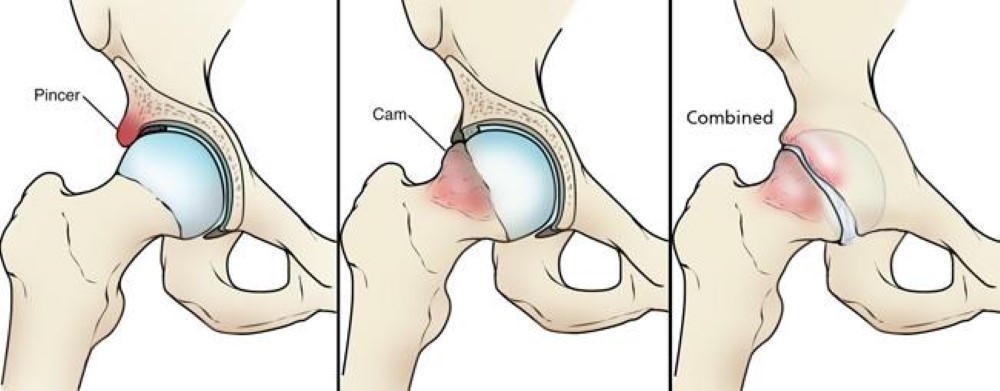
One of the biggest mistakes I see is athletes trying to stretch through front hip pain/pinching. While mobility work has its place, FAI-type symptoms often come from excessive contact between the femur and the pelvis at progressively deeper angels of hip flexion and internal rotation — not simply tight muscles.
That means:
• More hip flexor stretching doesn’t create more joint space, it can potentially cause more abnormal contact
• Aggressive deep mobility into flexion and/or internal rotation can actually increase irritation
• Positioning and load management matter more early on
Instead, we want to focus on improving posterior hip mobility, trunk control, and strength so the hip can sit better within the socket.
🏋️ Smarter Squat Variations That Reduce Hip Stress
If back squatting flares up your hip, here are some alterantive bilateral squatting patterns you can try to continue training:
✅ Goblet Squats
A great starting point for retraining mechanics and controlling depth. Holding the kettlebell anteriorly helps maintain a more upright torso, which reduces stress on the front of the hip.
✅ Front Squats
Front loading encourages better trunk positioning and pelvic stability. This variation often feels more comfortable for athletes dealing with pinching at the bottom.
⚡ Zercher Squats (Advanced Option)
Not for everyone — but for experienced lifters, Zercher squats allow heavy loading while keeping an upright posture and strong bracing mechanics.
✅ Box Squats
Using a box as a depth cue helps limit provocative ranges without removing the squat pattern entirely.
🔑 The Strength Work Most People Skip
Changing squat style alone isn’t enough.
To actually improve symptoms long-term, you need to address:
• Glute max/med strength and hip extension
• Posterior hip capsule mobility
• Hip external rotation strength
• GRADUAL exposure to deeper ranges
This is how we keep athletes training at high intensity while reducing flare-ups.
📅 Ready to Train Without Pain?
🗓 Ready to Get Out of Pain? Book Your Evaluation Today
If shoulder pain, elbow pain, hip pain, or nagging injuries are slowing you down, there’s a proven path forward.
👉 Book your evaluation here: https://go.dptpreneur.com/widget/form/zt52az6nu2DnPG0S4SyG
📘 The Arm Pain Blueprint (FREE Download!)
Download the Arm Pain Blueprint to start your journey to throwing pain-free.
👉 https://app.dptpreneur.com/v2/preview/4J7IWRe36z3WAeFeGxmv
⚾ Pitcher’s Mechanical Blueprint (FREE GUIDE)
Break down the mechanical checkpoints that reduce stress and boost performance.
👉 https://go.dptpreneur.com/widget/form/n11cl2tkQwwi9BfjnWpz
🎙 Listen to This Episode on The Lewis Physical Therapy & Sports Rehab Podcast
Catch the full breakdown of squat modifications, hip positioning, and training around impingement symptoms.
🎧 Listen on Spotify: https://open.spotify.com/show/4A6iBs0CzkAwSu9rUVPfGX?si=lrea2AaWQSy5USIT90KXhQ
