Lat Strain Rehab for Pitchers: A Step-by-Step Return to Throwing
Lat Strain Rehab for Pitchers: A Step-by-Step Return to Throwing - Lewis Physical Therapy & Sports Rehabilitation
at strains have become increasingly common in pitchers over the past several years, especially as throwing velocities continue to climb. Unfortunately, many pitchers are rushed back to throwing without a clear rehab progression—leading to lingering pain, re-injury, or compensations elsewhere in the arm.
In this article, we’ll break down why lat strains happen, what proper rehab should look like, and how to safely progress back to throwing without skipping critical steps.
Watch Now on YouTube for This Video
📺 Watch Here:
Why Lat Strains Are Becoming More Common in Pitchers
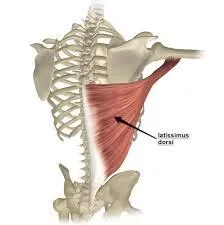
The latissimus dorsi plays a major role in pitching mechanics. Specifically, the lat contributes to:
Shoulder extension
Shoulder adduction
Internal rotation
From a pitching standpoint, the lat is most active during two key phases:
Layback (maximum external rotation) – where the lat undergoes a powerful eccentric contraction
Acceleration – where it concentrically contracts to help drive the arm forward
However, many lat strains don’t occur in layback. Instead, they often happen during the follow-through phase, when the arm is extended out in front of the body.
The (Potential) Real Cause Behind Many Lat Strains
One of the biggest contributors to lat strains CAN be rotator cuff fatigue or weakness.
During follow-through, the rotator cuff’s primary job is to decelerate the arm. When the cuff isn’t doing its job effectively—whether due to fatigue, strength deficits, or poor recruitment—another structure has to take over.
That structure is often the lat.
The problem?
The lat is designed to accelerate the arm, not act as a primary decelerator. Over time, this overload can lead to strain, especially in high-velocity pitchers.
Phase 1: Early-Stage Lat Rehab (Below 90°)
Early rehab focuses on calming symptoms while reintroducing controlled load to the tissue.
At this stage, we prioritize:
Rotator cuff activation
Scapular stability
Lat isometrics below 90°
Key Exercises
Lat Extension Isometrics
Lat Adduction Isometrics
Longer-duration isometric holds are especially useful if there is tendon involvement or tenderness near the armpit region.
The goal here is not fatigue—it’s tissue tolerance and control.
Phase 2: Mid-Stage Rehab (Above 90° and Overhead)
Once symptoms improve and basic strength returns, we begin gradually loading the lat in overhead positions.
At this stage, we introduce:
Overhead lat extension isometrics
Band-resisted extension through range
90/90 internal rotation isometrics
Scapular positioning is critical here. The shoulder should remain stacked and stable without excessive forward translation.
This phase bridges the gap between basic rehab and sport-specific demands.
Phase 3: Late-Stage Rehab (Ballistic & Speed Preparation)
Before a pitcher returns to throwing, the arm must tolerate speed, unpredictability, and rapid co-contraction.
Rather than relying solely on high-volume medicine ball work, we focus heavily on:
Chaos band drills
Fast, reactive movements in extension
90/90 flutter and transition patterns
These drills help prepare the lat and rotator cuff for the demands of throwing without excessive volume or joint stress.
Key Takeaway: Lat Rehab Is About More Than the Lat
Successful lat rehab isn’t about resting longer or blindly strengthening the muscle. It’s about:
Addressing rotator cuff fatigue
Progressively loading the lat at the right angles
Preparing the arm for speed before throwing resumes
When these steps are followed correctly, pitchers can return to the mound stronger, more resilient, and better prepared for the season ahead.
🗓 Tired of Having Elbow or Shoulder Pain Every Time You Throw? Book Your Evaluation Today
If elbow pain, shoulder pain, or arm fatigue is holding you back, there’s a proven path forward.
👉 Book your evaluation here:
https://go.dptpreneur.com/widget/form/zt52az6nu2DnPG0S4SyG
🎙 Listen to This Topic on The Lewis Physical Therapy & Sports Rehab Podcast
Dive deeper into the shoulder and arm stability concepts pitchers need to stay healthy all season.
🎧 Listen on Spotify:
https://open.spotify.com/show/4A6iBs0CzkAwSu9rUVPfGX?si=lrea2AaWQSy5USIT90KXhQ
📘 The Arm Pain Blueprint (FREE Download!)
Download the Arm Pain Blueprint to start your journey to throwing pain-free.
👉 https://app.dptpreneur.com/v2/preview/4J7IWRe36z3WAeFeGxmv
⚾ Pitcher’s Mechanical Blueprint (FREE GUIDE)
Break down the mechanical checkpoints that reduce stress and boost velocity.
👉 https://go.dptpreneur.com/widget/form/n11cl2tkQwwi9BfjnWpz
