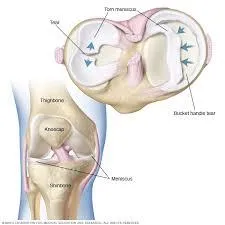
Meniscus Rehab Tips: How to Restore Motion, Build Strength & Return to Running
Meniscus Rehab Tips: How to Restore Motion, Build Strength & Return to Running – Lewis Physical Therapy & Sports Rehab
What You’ll Learn in This Blog
If you’re dealing with a meniscus injury, one of the biggest mistakes you can make is assuming rehab is just about resting until the pain goes away.
The reality is that successful meniscus rehab usually comes down to loading the knee correctly, restoring the right motion at the right time, and gradually building back toward the specific activities you want to return to.
In this blog, you’ll learn:
the common signs and symptoms that often show up with meniscus injuries
why restoring knee extension matters more than forcing flexion early
how to load the knee without constantly irritating it
when to use isometrics, strength work, and running progressions
why runners and field sport athletes may need different return-to-run strategies
🎥 Watch the Full Rehab Breakdown on YouTube
Don’t miss the full breakdown on meniscus rehab progressions, loading strategies, and return-to-running considerations.
▶️ Watch Now on YouTube:
Why Meniscus Rehab Often Gets Off Track
Meniscus injuries can show up in a few different ways, but some of the most common complaints include joint line pain, discomfort with twisting, pain with deep knee flexion, stiffness after sitting, and symptoms when turning or pivoting on the leg.
Where rehab often gets off track is when people either do too little for too long or try to force too much too early.
A lot of people immediately focus on bending the knee deeper, loading split squats too aggressively, or jumping back into running and twisting movements before the knee is ready. That usually just keeps the joint irritated.
Instead, successful rehab tends to come from respecting the irritated tissues early while still rebuilding the movement and strength qualities the knee needs.
Restore Knee Extension First
One of the most important priorities early on is restoring full knee extension.
If you can’t fully straighten the knee, normal walking mechanics become altered. That often leads to compensation patterns through the hip, ankle, and opposite leg. Over time, that can create even more problems.
This is why I usually prioritize extension before trying to push flexion aggressively. In many meniscus cases, forcing knee flexion too early tends to increase irritation. Flexion usually comes back more naturally when swelling decreases, quad function improves, and loading is progressed appropriately.
Rebuild Quad Function Early
With meniscus injuries, especially when swelling is present, the quad is often one of the first muscle groups to shut down.
That matters because your quad helps restore knee extension, supports walking mechanics, and improves the knee’s ability to tolerate load.
If quad function is ignored early, it can create a long list of downstream issues. This is why getting the quad active again is such a big focus in the early phase of rehab. Depending on the person, this may include low-irritability quad work, blood flow restriction training, and controlled loading strategies that stimulate strength without flaring symptoms up.
Avoid Deep Flexion and Twisting Early
Another important piece early on is reducing aggravating movements.
For many symptomatic meniscus injuries, deep knee flexion, twisting, and impact-based activities are some of the biggest symptom triggers. That doesn’t mean those movements are bad forever. It just means they are often not the best starting point in the acute or subacute phase.
Early rehab should focus on positions and exercises the knee can tolerate well. For many people, that means spending more time in shallower knee bend angles instead of trying to chase deep squats, lunges, or loaded rotational patterns right away.
Use Smart Strength Progressions
One of the most effective ways to load the knee early is through controlled closed-chain work in a tolerable range.
For many people, that means working in roughly 0 to 60 degrees of knee flexion with movements like:
step-ups
mini squats
step-downs
high split squat or lunge positions
These positions often allow you to build strength and control without exposing the knee to the higher irritation that can come with deeper flexion angles too soon.
Open-chain work can also be useful, especially for targeting the quad in a controlled range.
Why Positional Isometrics Work So Well
Positional isometrics are one of the most underappreciated tools in knee rehab.
Exercises like wall sits or split squat holds can help build tolerance, improve limb stability, and strengthen key positions without requiring repeated movement through a provocative range.
This matters because many people with meniscus injuries struggle with force control and stability before they struggle with pure strength. Isometrics can help bridge that gap.
A common progression is to start with longer-duration holds at lower intensity, then gradually increase load while reducing the hold time. That creates a simple way to build tolerance and capacity without overcomplicating the process.
Don’t Rush Knee-Dominant Hamstring Work
Hamstring work is important, but I’m usually cautious with more knee-flexion-dominant hamstring exercises early in meniscus rehab.
Things like hamstring curls can sometimes be provocative too soon, especially if the knee is still irritable.
Instead, it often makes more sense to begin with hip-dominant hamstring work such as RDL variations or bridge patterns, then gradually progress toward longer-lever or more knee-driven hamstring loading as the knee improves.
Address the Hip and Ankle Too
The knee rarely works in isolation.
If the hip lacks mobility, strength, or rotational control, the knee often takes on more stress than it should. The same is true if the ankle and foot can’t absorb force well or contribute effectively during gait, running, and change of direction.
That’s why strong meniscus rehab should also include:
hip strength and stability work
ankle mobility when needed
foot and lower-leg stiffness/control drills
single-leg control and force absorption work
If you only treat the painful area and ignore the joints above and below, progress usually stalls.
Returning to Running the Right Way
Returning to running after a meniscus injury should be individualized.
For recreational runners or active adults, it often makes sense to start with a simple walk-jog progression and gradually increase exposure over time. In many of these cases, running itself becomes the primary plyometric stimulus.
For more athletic populations, especially those involved in cutting, sprinting, and multidirectional sports, rehab usually needs to be more layered. That may include:
tempo running progressions
acceleration work
pre-planned change of direction
reactive movement progressions
more formal plyometric sequencing
Not everyone needs the same progression. The rehab should match the athlete’s history, movement demands, and goals.
Final Thoughts
Meniscus rehab is not just about waiting for pain to settle down.
It’s about restoring knee extension, rebuilding quad strength, loading the knee intelligently, improving full-limb function, and progressing back to running or sport based on the individual in front of you.
When you respect the early irritability of the knee but still build strength and capacity in the right order, people tend to do much better.
That’s how you help someone get out of pain and back to the activities they actually care about.
🗓 Ready to Run or Lift without Knee Pain? Book Your Evaluation Today
If knee pain is limiting your workouts, running, or daily activity, there’s a proven path forward.
👉 Book your evaluation here: https://go.dptpreneur.com/widget/form/zt52az6nu2DnPG0S4SyG
Online Training Programs For Adults & Athletes:
https://www.trainerize.me/profile/lewisphysicaltherapyandsportsrehablitation/Jeff.LewisPTDPTATCCSCS/
🎙 Listen to This Episode on The Lewis Physical Therapy & Sports Rehab Podcast
Catch the full breakdown of how to structure meniscus rehab, build strength safely, and return to running without constantly flaring symptoms up.
🎧 Listen on Spotify: https://open.spotify.com/show/4A6iBs0CzkAwSu9rUVPfGX?si=lrea2AaWQSy5USIT90KXhQ
Free Resources
📘 The Arm Pain Blueprint (FREE Download!)
https://app.dptpreneur.com/v2/preview/4J7IWRe36z3WAeFeGxmv
⚾ Pitcher’s Mechanical Blueprint (FREE GUIDE)
👉 https://go.dptpreneur.com/widget/form/n11cl2tkQwwi9BfjnWpz
