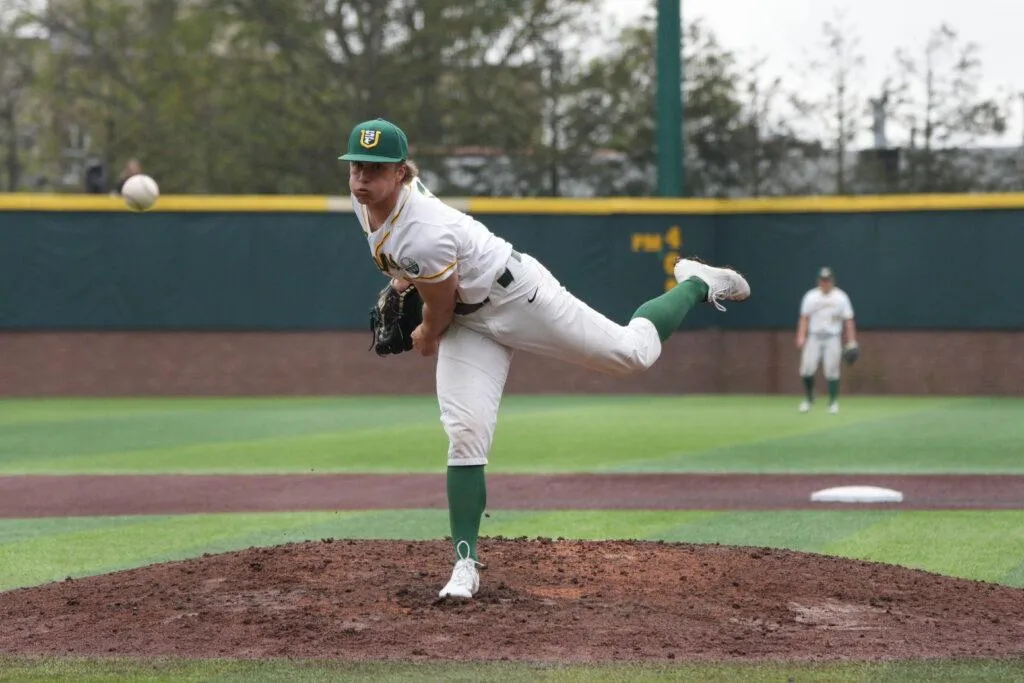
How to Structure a Successful Return-to-Throwing Program for Pitchers
How to Structure a Successful Return-to-Throwing Program for Pitchers - Lewis Physical Therapy & Sports Rehabilitation
Returning to throwing after injury isn’t just about picking up a ball again — it’s about following a structured, progressive plan that respects both tissue healing and performance demands.
🎥 Watch the Full Breakdown on YouTube
If you want to see exactly how return-to-throwing programs are structured from day one through bullpens, this video walks you through the full progression step by step.
Watch it Here:
Why Return-to-Throwing Programs Must Be Individualized
One of the biggest misconceptions in baseball rehab is that throwing programs are universal and follow a one-size-fits-all approach. Even pitchers coming off the same surgery — like Tommy John — often follow completely different progressions.
Factors that influence programming include:
Injury history (previous shoulder/elbow injuries)
Age and competitive level
Strength and mobility findings
Throwing mechanics
Previous workload and velocity
The goal isn’t just to return to throwing — it’s to return without re-injury risk.
Step 1: The Pre-Throwing Checklist
Before any throwing begins, pitchers need to meet key performance benchmarks:
Restored range of motion (shoulder TROM, horizontal adduction, shoulder flexion with and without scapulae being pinned, elbow flexion & extension)
Strong rotator cuff and scapular control
Ability to tolerate plyometrics and medball work
Sufficient exposure to loading in different patterns in the weight room
Skipping this phase often leads to setbacks later in the progression.
Step 2: Distance Progression
Most athletes begin around 60 feet, gradually progressing toward 120–135 feet.
Why that distance?
Because some research suggests mechanics at longer distances start to resemble mound mechanics, making it a critical bridge between rehab and competition.
Shorter shutdown cases may progress faster, while post-surgical athletes move through smaller increments like:
60 → 75 → 90 → 105 → 120 → 135 feet
Step 3: Frequency and Workload Progression
Early throwing usually starts around three days per week.
As tolerance improves, athletes progress toward:
Back-to-back throwing days
Four to six throwing days per week
Undulating workloads to manage fatigue (high day of throwing followed by a low day, whether that is in terms of intensity, volume or both)
This gradual increase allows tissue adaptation without sudden spikes.
Step 4: Pitch Type and Intensity
Fastballs typically come first, followed by change-ups.
Breaking balls and off-speed pitches are introduced later — often after reaching 90-105 feet and demonstrating good tolerance to volume.
We recommend using a pocket radar to accurately track throwing velocity and specific responses/ability to recover from certain intensities. This ensure we are not overloading the arm early in the rehab process.
Step 5: Transitioning to Flat Ground and Bullpens
Once distance tolerance improves, athletes begin flat-ground work (throwing on line at 60') at higher intensity before progressing to bullpens.
Typical bullpen progression:
10–12 pitches (either on bottom/middle of slope or, in short-term cases, right to full mound height)
Build toward 30 pitches
Up-down bullpen formats to simulate game conditions
Step 6: Why Throw Volume Matters
Before stepping on the mound, pitchers should tolerate roughly 65–80 throws per session.
Underdosing volume may leave athletes underprepared for higher intensity pitching environments.
📅 Ready to Throw Pain-Free? (Arm Pain Blueprint CTA)
Download the Arm Pain Blueprint to learn how pitchers rebuild strength and return to throwing safely.
⚾ Pitcher’s Mechanical Blueprint (FREE GUIDE)
👉 https://go.dptpreneur.com/widget/form/n11cl2tkQwwi9BfjnWpz
🎙 Listen to This Episode on The Lewis Physical Therapy & Sports Rehab Podcast
Catch the full breakdown of return-to-throwing progressions and how pitchers safely rebuild workload after injury.
🎧 Listen on Spotify: https://open.spotify.com/show/4A6iBs0CzkAwSu9rUVPfGX?si=lrea2AaWQSy5USIT90KXhQ
