Why Pitchers Should Keep Training During Rehab (And Why Shutting Down Backfires)
Why Pitchers Should Keep Training During Rehab (And Why Shutting Down Backfires) - Lewis Physical Therapy & Sports Rehab
One of the most common — and costly — mistakes I see injured pitchers make is shutting everything down the moment an injury happens.
Whether it’s shoulder pain, elbow pain or a UCL or labrum injury, many players are told to “just rest” for weeks at a time. While certain tissues absolutely need protection, complete shutdown leads to rapid deconditioning and sets the stage for problems once throwing resumes.
Rehab should protect the injured structure — not destroy the rest of your body.
🎥 Watch the Full Breakdown on YouTube
🎥 Watch the Full Video on YouTube
Don’t miss the full breakdown on rehab-to-training transitions and injury-safe programming.
▶️ Watch Now on YouTube:
Why “Just Rest” Fails Pitchers
Pitching is a full-body movement. The arm doesn’t create velocity on its own — pitchers transfers force from the ground, through the hips and core, and to the arm.
When pitchers stop training completely during rehab:
Lower-body strength drops
Core stability declines
Work capacity plummets
Coordination and timing are lost
Then, when throwing starts again, the arm is forced to do more work than it should, dramatically increasing stress and reinjury risk.
This is one of the biggest reasons pitchers feel “weak,” “off,” or painful when returning to throwing.
What Training During Rehab Actually Means
Training during rehab does not mean ignoring restrictions or pushing through pain.
It means intelligently training everything that isn’t injured.
For arm injuries, this includes:
The lower body
The core
The non-injured arm
Conditioning and general work capacity
Even early after surgery or injury, there are safe ways to maintain strength and neurological drive without putting the healing tissue at risk.
Lower Body & Core: The Arm’s Best Protection
A large percentage of pitching velocity and force production comes from the legs and hips. If those systems aren’t trained during rehab, the arm has no choice but to compensate later.
That’s why rehab programs should continue to emphasize:
Squat and hinge patterns (belt squats, supported variations)
Non-injured arm push & pull variations
Long-duration isometrics
Core stability and rotational work
Conditioning (bike, sleds, tempo work)
These strategies aren’t flashy — but they’re effective.
Rehab Should Transition Back Into Training
One major red flag I see is when rehab never evolves.
Early rehab may focus on protection and isolated arm care, but over time:
Arm loading should increase appropriately
Weight-room training should resume
Sprinting and jumping should be reintroduced
Field work should gradually return
By the later stages, “rehab” should mostly consist of targeted arm care — while real training happens in the weight room and on the field.
That transition is critical for durable returns to play.
Training Around Injuries Requires Creativity — Not Perfection
If you can’t load one area, you find another way to create stimulus:
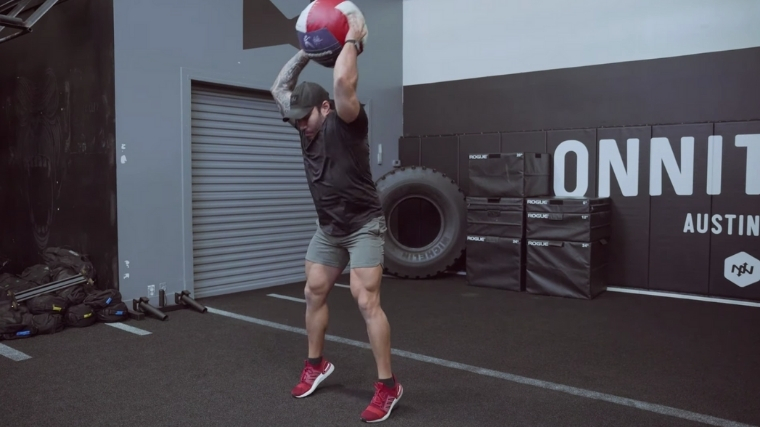
Seated med-ball throws
Heavier dumbbell pressing
Long-duration, Low Intensity & Short-Duration, High-Intensity Isometrics
Creative conditioning options
The goal isn’t perfection — it’s adaptation.
The Bottom Line
Injury doesn’t mean you stop training.
It means you train smarter.
Pitchers who continue building strength, power, and capacity during rehab return more confident, more durable, and far less likely to reinjure their arm.
🗓 Tired of Arm Pain With Throwing? Book Your Evaluation Today
If shoulder pain, elbow pain, or nagging injuries are slowing you down, there’s a proven path forward.
👉 Book your evaluation here:
https://go.dptpreneur.com/widget/form/zt52az6nu2DnPG0S4SyG
📘 The Arm Pain Blueprint (FREE Download!)
Download the Arm Pain Blueprint to start your journey to throwing pain-free.
👉 https://app.dptpreneur.com/v2/preview/4J7IWRe36z3WAeFeGxmv
⚾ Pitcher’s Mechanical Blueprint (FREE GUIDE)
Break down the mechanical checkpoints that reduce arm stress and boost velocity.
👉 https://go.dptpreneur.com/widget/form/n11cl2tkQwwi9BfjnWpz
🎙 Listen to This Episode on The Built-To-Throw Podcast
Catch the full breakdown on how pitchers should train during rehab to stay strong and reduce reinjury risk.
🎧 Listen on Spotify:
https://open.spotify.com/show/4A6iBs0CzkAwSu9rUVPfGX?si=lrea2AaWQSy5USIT90KXhQ
