3 Banded Shoulder Mobility Drills Pitchers Can Use to Restore Range of Motion & Reduce Arm Stress
3 Banded Shoulder Mobility Drills Pitchers Can Use to Restore Range of Motion & Reduce Arm Stress - Lewis Physical Therapy & Sports Rehabilitation
sShoulder mobility restrictions are one of the most common issues I see in pitchers dealing with shoulder pain, elbow pain, or loss of velocity. While some changes in shoulder range of motion are normal in throwing athletes, excessive loss — especially internal rotation — can quickly lead to problems if not managed properly.
For pitchers, it’s not just about having “loose” shoulders. It’s about having enough usable range of motion and the strength and stability to control that range throughout the throwing motion.
In this article, I’m breaking down three banded shoulder mobility drills I frequently use with pitchers who present with:
Loss of internal rotation
Difficulty getting overhead comfortably
Anterior (front-of-shoulder) pain with throwing or lifting
Stiffness the day after bullpens or games
These drills are designed to restore mobility without jamming the front of the shoulder or creating irritation.
🎥 Watch the Full Video Breakdown on YouTube
In the video below, I walk through:
Why shoulder mobility matters specifically for pitchers
How much internal rotation loss is considered problematic
Why certain “classic” stretches (like the sleeper stretch) often make things worse
How to properly perform each banded drill step-by-step
When to use these drills during the week (warm-up vs recovery days)
🎥 Watch the Full Shoulder Mobility Breakdown on YouTube
Don’t miss the full demonstration and coaching cues for each drill.
▶️ Watch Now on YouTube:
Why Shoulder Mobility Is So Important for Pitchers
From a throwing standpoint, pitchers need sufficient external rotation, internal rotation, and total shoulder range of motion to safely move through the high-speed positions of the pitching delivery.
When we look at total range of motion (internal + external rotation), the throwing shoulder should generally be within 5 degrees of the non-throwing side. While it’s very common — and normal — for pitchers to lose some internal rotation on their throwing arm, a deficit of 20 degrees or more is often associated with increased stress on the shoulder or elbow.
Loss of motion can come from several sources:
Posterior capsule stiffness
Rotator cuff and posterior shoulder tissue tightness
Lat and teres major restrictions
In some cases, lack of stability or control rather than true “tightness”
For today’s purposes, these drills focus specifically on posterior shoulder and lat-based mobility restrictions, which are extremely common in pitchers.
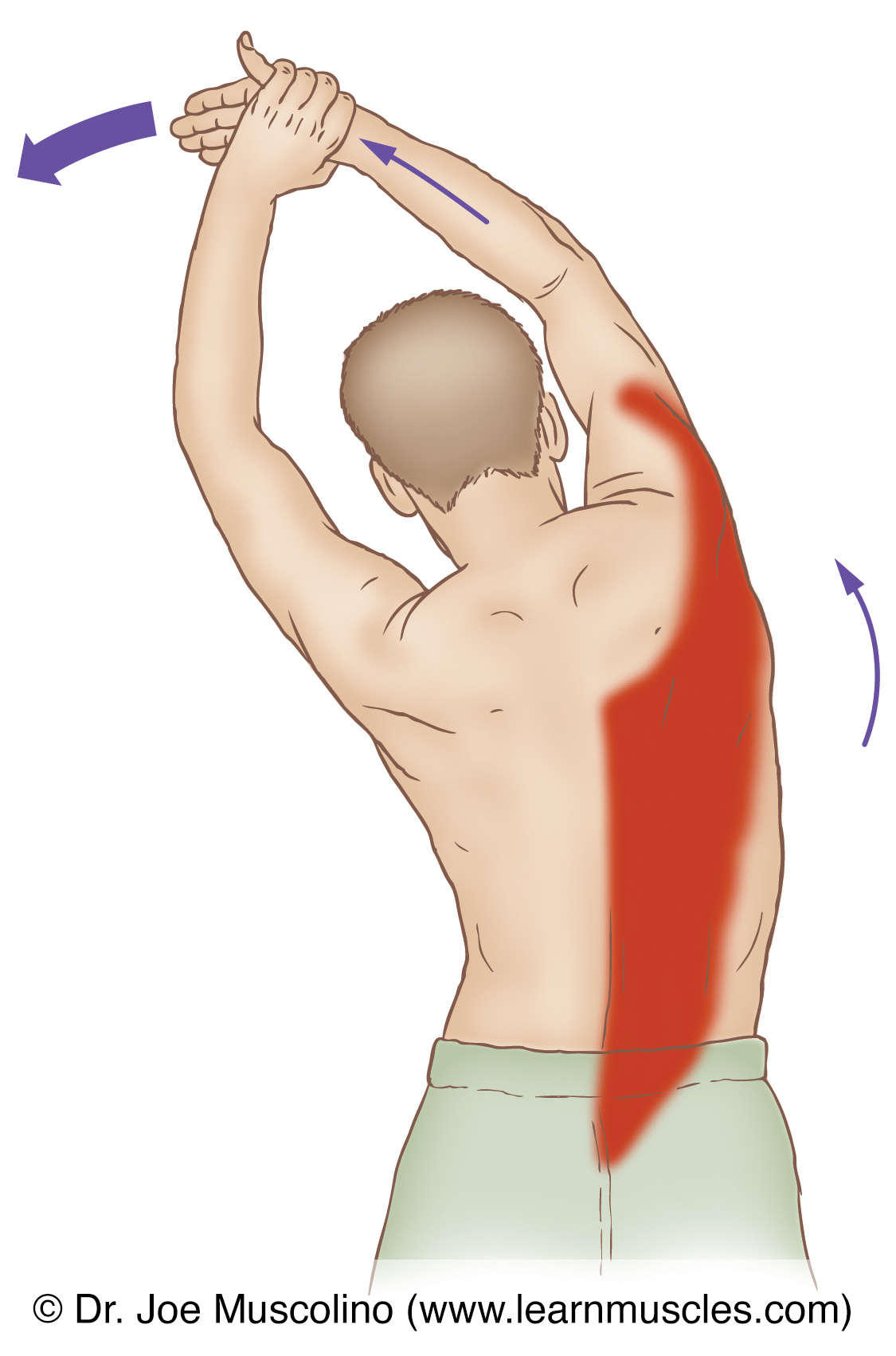
Drill 1: Banded Lat & Lateral Line Stretch
This first drill targets the latissimus dorsi and lateral trunk tissues, which play a major role in overhead motion and arm slot positioning.
By anchoring a heavy mobility band overhead and sitting back and away from the anchor point, you allow:
Improved overhead shoulder motion
Expansion through the rib cage and lateral trunk
Reduced tension that can pull the arm forward during throwing
Key coaching point:
You should not feel pinching in the front of the shoulder. If you do, your positioning needs to be adjusted.
Programming:
2 sets of 30–45 seconds
Up to 60 seconds if significantly tight
Can be used in warm-ups or recovery days
Drill 2: Banded Teres Major Stretch
This variation places more emphasis on the teres major and posterior armpit region, an area that commonly restricts pitchers overhead.
With the elbow supported in the band, the shoulder is allowed to:
Move into upward rotation
Stretch the posterior shoulder tissues
Improve comfort in overhead positions
You should feel this primarily in the armpit, not along the side of the trunk.
Programming:
2 sets of 30–45 seconds
Excellent the day after throwing or during light recovery sessions
Drill 3: Posterior Capsule Banded Stretch (Sleeper Stretch Alternative)
Many pitchers are familiar with the sleeper stretch — but in practice, it often pushes the shoulder forward and irritates the front of the joint.
This banded alternative allows you to:
Target the posterior capsule more directly
Avoid excessive anterior shoulder pressure
Control the amount of stretch more precisely
The sensation should be felt in the back of the shoulder, not the front.
Programming:
2 sets of 30–45 seconds
Progress slowly — this area is often very sensitive in pitchers
When Should Pitchers Use These Drills?
These banded shoulder mobility drills can be used:
As part of a dynamic warm-up
During post-throwing cooldowns
On recovery days following bullpens or games
Most pitchers experience some loss of shoulder motion the day after throwing. The goal isn’t to stretch aggressively — it’s to restore usable range of motion so the arm can recover and be ready for the next outing.
🗓 Ready to Throw or Lift Without Shoulder Pain? Book Your Evaluation Today
If shoulder pain, elbow pain, or arm fatigue is holding you back, there’s a proven path forward.
👉 Book your evaluation here:
https://go.dptpreneur.com/widget/form/zt52az6nu2DnPG0S4SyG
📘 FREE Download: The Arm Pain Blueprint
Learn how pitchers restore shoulder mobility, build arm strength, and return to throwing pain-free using a proven system.
👉 https://app.dptpreneur.com/v2/preview/4J7IWRe36z3WAeFeGxmv
⚾ Pitcher’s Mechanical Blueprint (FREE GUIDE)
Break down the mechanical checkpoints that reduce arm stress and improve performance.
👉 https://go.dptpreneur.com/widget/form/n11cl2tkQwwi9BfjnWpz
🎙 Listen to This Episode on The Lewis Physical Therapy & Sports Rehab Podcast
Catch the full breakdown of shoulder mobility, recovery strategies, and arm care concepts pitchers need to stay healthy all season.
🎧 Listen on Spotify:
https://open.spotify.com/show/4A6iBs0CzkAwSu9rUVPfGX?si=lrea2AaWQSy5USIT90KXhQ
