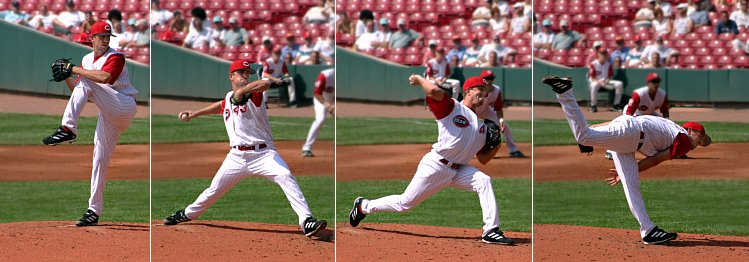
3 Throwing Mechanics Every Pitcher Should Address After an Arm Injury
3 Throwing Mechanics Every Pitcher Should Address After an Arm Injury - Lewis Physical Therapy & Sports Rehabilitation
What You'll Learn in This Blog
Returning to throwing after an injury involves much more than simply making the shoulder or elbow stronger. In this article you'll learn the three mechanical areas we evaluate during rehabilitation, why they matter, and how improving movement quality can reduce stress on the arm while building a safer return to pitching.
Watch This Week's Video on YouTube
Throwing Mechanics Should Be Part of Rehab
One of the biggest mistakes after an arm injury is focusing only on the injured tissue.
While restoring strength and mobility is essential, movement quality throughout the kinetic chain often determines how much stress ultimately reaches the shoulder and elbow.
Rather than trying to completely rebuild a pitcher's mechanics, rehabilitation should focus on improving movement patterns that help the body transfer force efficiently.
1. Backside Mechanics
Everything starts with the lower body.
One of the first things I evaluate is how well a pitcher uses their back hip during the stride phase.
Instead of simply falling toward home plate, pitchers should learn how to drive down the mound using their glutes and lower body.
Poor backside mechanics often lead to:
Early trunk rotation
Increased shoulder and elbow stress
Poor force production
During rehab we also evaluate hip range of motion and glute utilization to determine why a pitcher may struggle with this movement.
2. Trunk Position and Hip-Shoulder Separation
The trunk serves as the bridge between the lower body and the arm.
A stable trunk allows force generated by the legs to transfer efficiently into the baseball.
We evaluate:
Trunk tilt
Glove-side positioning
Hip-shoulder separation
Core stability
Poor trunk positioning often causes pitchers to compensate with their shoulder or elbow later in the delivery.
3. Arm Action and Timing
Finally, we evaluate the arm itself.
Common issues include:
Excessive horizontal abduction (arm is flying behind the body)
Late arm action
Poor elbow positioning (unable to achieve at least 90 degrees of elbow flexion)
Delayed arm timing
These movement patterns can significantly increase stress on both the anterior shoulder and the medial elbow.
Rather than immediately jumping into aggressive throwing, many athletes benefit from one to two weeks of drill work to rebuild proper movement patterns before progressing into a structured throwing program.
Drill Work Can Be Extremely Valuable
Especially following surgery or a long layoff, drill work helps pitchers regain awareness of where their arm is in space.
This improves proprioception, coordination, and confidence before throwing at higher intensities.
While it may feel like slower progress initially, investing extra time into movement quality often pays off throughout the remainder of the rehabilitation process.
Final Thoughts
Throwing mechanics during rehabilitation aren't about creating the perfect delivery.
They're about reducing unnecessary stress while helping athletes build efficient movement patterns that support both recovery and long-term performance.
When rehabilitation, strength training, throwing progression, and coaching all work together, pitchers are put in the best position for a successful return to competition.
⚾ Built for the Diamond: 10-Week Baseball Strength & Power Program
Speed, power, explosiveness, and arm care — all in one structured program built specifically for baseball players.
👉 https://www.lewisptsr.com/baseball-strength-power-program-310732
🏋️ Stop Starting Over: 10-Week Strength Program for Former Athletes (Ages 20–30)
Built for guys with an athletic background, old injuries, and a busy schedule who are ready to train smart and build something that lasts.
👉 https://www.lewisptsr.com/back-to-basics-program
💪 Arm Pain with Throwing? Check out the Lewis Arm Rebuild Program here:
👉 https://www.lewisptsr.com/lewis-arm-rebuild-program
📚 Blog
https://www.lewisptsr.com/home-blog-1358
