Shoulder Labrum Injuries in Baseball Pitchers
Shoulder Labrum Injuries in Baseball Pitchers – Lewis Physical Therapy & Sports Rehabilitation
What You'll Learn in This Blog
Shoulder labrum injuries are one of the most concerning diagnoses for baseball pitchers. In this article, you'll learn the different types of labral injuries, why surgery isn't always necessary, and the key rehabilitation principles that help pitchers safely return to throwing.
🎥 Watch This Week's Video on YouTube
What Does the Shoulder Labrum Do?
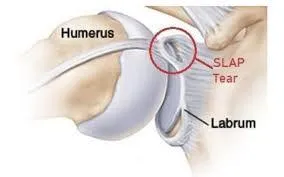
The shoulder is the most mobile joint in the body, making stability extremely important. The labrum acts as a ring of cartilage around the socket, helping improve stability while still allowing the tremendous range of motion needed for pitching.
During throwing, the labrum experiences enormous forces—especially during maximum external rotation.
SLAP Tears vs Internal Impingement
Not every labral injury presents the same way.
A SLAP tear typically causes pain in the front of the shoulder around the biceps tendon during layback/early acceleration.
Internal impingement typically creates pain or "pinching" deep in the back of the shoulder when the arm reaches maximum external rotation in layback. If the rotator cuff is more involved in this case, it's not uncommon to get pain at release/follow-through.
Understanding which pattern you're dealing with changes how rehab should be approached.
Why Conservative Treatment Comes First
Labrum surgery in pitchers has significantly more challenges than many other shoulder or elbow procedures.
One of the biggest hurdles after surgery is restoring the amount of external rotation—or layback—needed to throw at a high level. During surgery, the repair of the labrum to the glenoid is what "tightens" the shoulder up. So while it is necessary, it can be challening to get that full range of motion back.
Because of this, aggressive non-operative rehabilitation should almost always be attempted first whenever appropriate.
What Rehab Should Focus On
Successful rehab extends far beyond simply strengthening the rotator cuff.
Important components include:
Monitoring shoulder mobility frequently
Restoring total rotational motion
Improving cross-body adduction
Building both external and internal rotation strength
Optimizing scapular control
Gradually progressing throwing volume
These objective measures help reduce unnecessary stress on both the shoulder and elbow during return-to-throw programs.
Internal Rotation Strength Matters More Than Most Think
While external rotation strength often receives most of the attention, internal rotation strength provides valuable information about shoulder stability and fatigue.
If internal rotation strength begins to decline during throwing progression, it may indicate that the shoulder is becoming overloaded (along with the athlete's subjective reports/complaints on fatigue).
Monitoring both sides of the rotator cuff gives a much clearer picture of shoulder health.
Don't Ignore the Lower Half
The shoulder rarely works alone.
Poor lower-body mechanics, trunk control, or inefficient force transfer can significantly increase stress placed on the labrum.
Addressing the entire kinetic chain—not just the shoulder—is one of the biggest differences between simply reducing pain and helping pitchers return to peak performance.
Final Thoughts
A labrum injury doesn't automatically mean your season—or your career—is over.
With an accurate diagnosis, objective testing, individualized rehabilitation, and a carefully managed throwing progression, many pitchers successfully return without surgery or maximize their recovery after surgery if it's truly needed.
⚾ Built for the Diamond: 10-Week Baseball Strength & Power Program
Speed, power, explosiveness, and arm care — all in one structured program built specifically for baseball players.
👉 https://www.lewisptsr.com/baseball-strength-power-program-310732
🏋️ Stop Starting Over: 10-Week Strength Program for Former Athletes (Ages 20–30)
Built for guys with an athletic background, old injuries, and a busy schedule who are ready to train smart and build something that lasts.
👉 https://www.lewisptsr.com/back-to-basics-program
💪 Arm Pain with Throwing?
Check out the Lewis Arm Rebuild Program here:
https://www.lewisptsr.com/lewis-arm-rebuild-program
📚 Read More Baseball & Rehab Articles
https://www.lewisptsr.com/home-blog-1358
🎵 Listen to the Lewis Physical Therapy & Sports Rehabilitation Podcast
https://open.spotify.com/show/4A6iBs0CzkAwSu9rUVPfGX?si=lrea2AaWQSy5USIT90KXhQ
